Under the microscope: V-Rally 2 (PlayStation)
Uncovering Araignos, the Snake clone that's hiding inside another PlayStation game
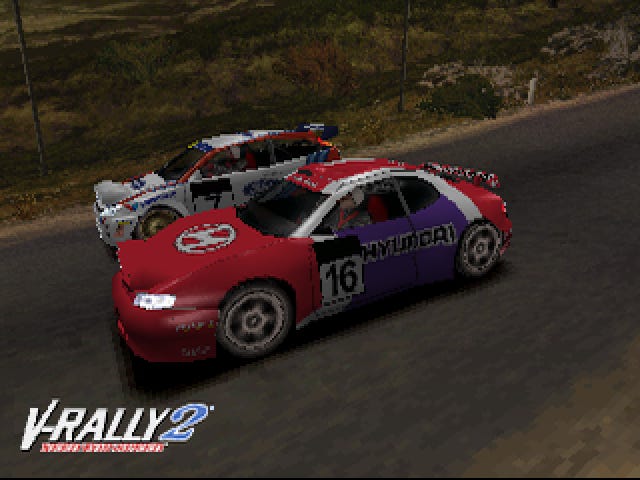
In this edition, we’re examining V-Rally 2, the PlayStation racing game from Eden Studios. This was released in the U.S. as Need For Speed: V-Rally and in Japan and Europe as V-Rally 2: Championship Edition.
I found a really cool Easter egg for this game – one that seems to have gone unnoticed since 1999 – by examining a memory snapshot from the Mednafen emulator in Ghidra. Read on for details about the reverse engineering and how to access the Easter egg.
The reverse engineering
There’s a well-known cheat code for this game. It’s entered on the Options > Game Progression menu, and lets you unlock all cars, levels, trophies, and championships. Its buttons are:
L1, R1, Left, Right, Left, Right, Up, Down, Up, Down, X, X+Select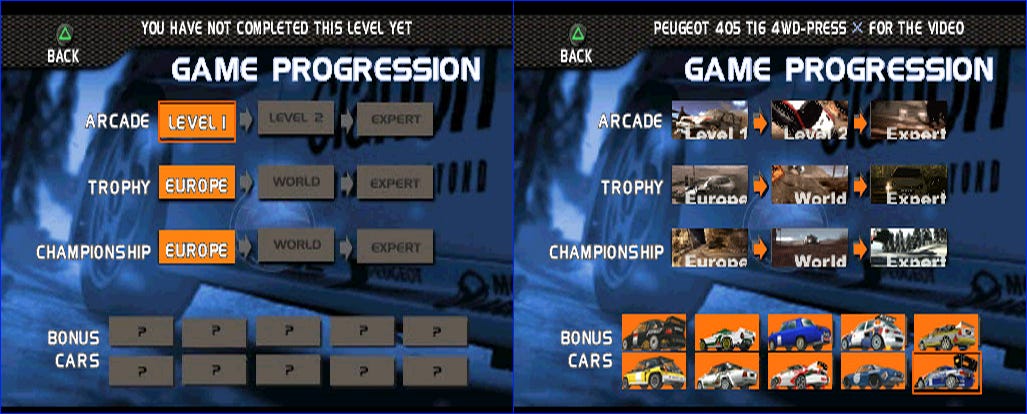
This code is tracked by the function at 8009c428 (in the NTSC-U version, anyway). It gets called with one argument, a pointer to a data structure that looks like this:
1 byte: a counter that keeps track of how many correct buttons have been pressed.
1 byte: a timer that counts how many frames have elapsed since the last correct button press.
4 bytes: a pointer to an array of structs. Those structs look like this:
2 bytes: The bit patterns associated with one of the code buttons.
1 byte: The frame count at which the timer should reset (your code entry progress resets along with it)
4 bytes: a pointer to a function to execute after a successful button press.
The data structure that has the “unlock everything” code is at 800c4f1c, so a pointer to that address is used as the argument to the code tracking function. But that function gets called a second time, with a different pointer.
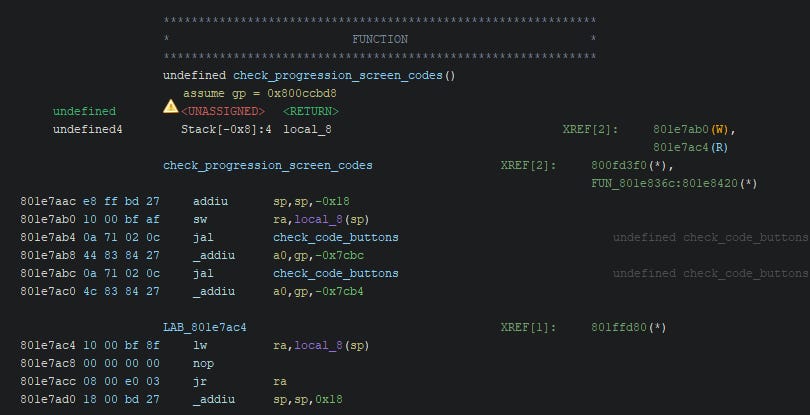
check_code_buttons.What’s the second one? Its button sequence is:
L1, R1, L2, R2,
L1, L1, R1, R1,
L2, L2, R2, R2,
Circle, Select+Circle
If you put it in correctly, a sound effect plays and the value at 800c5388 gets set to 01. After that, if you leave the progress screen and start a race, you’ll be greeted with a surprise…
The ARAIGNOS mini-game
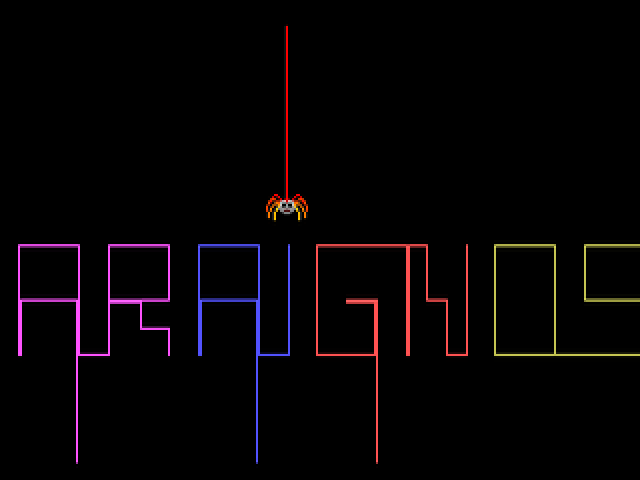
The surprise is for a hidden mini game called Araignos. The title screen shows a spider with a trailing web, but it’s more or less s a multi-player Snake game – the kind you might have played on a Nokia mobile phone in 2002.
It’s somewhat disappointing at first. With a normal setup, you can move player 1’s snake with Up or Down, but not player 2’s. So the snakes will crash into each other repeatedly, preventing you from playing for more than a few seconds.
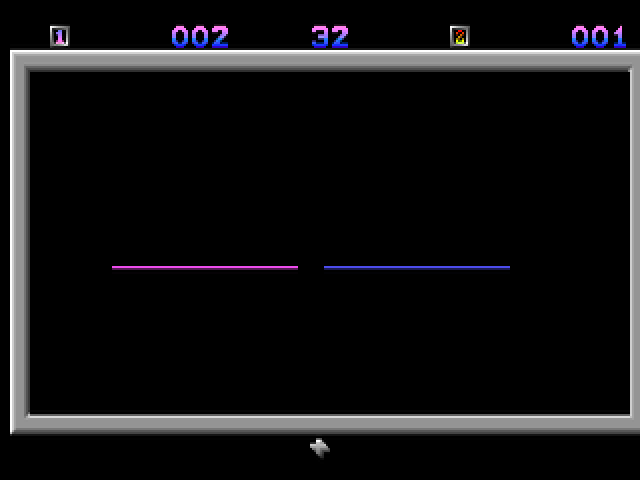
I showed this to Jason Dvorak of PlayStationLibrary.com, and he figured out how to make the game work:
To control the second snake, you need to use a PlayStation multi-tap. The game actually supports up to 4 players.
Up and Down move the snake in the expected directions, but you have to press Square for left and Circle for right.
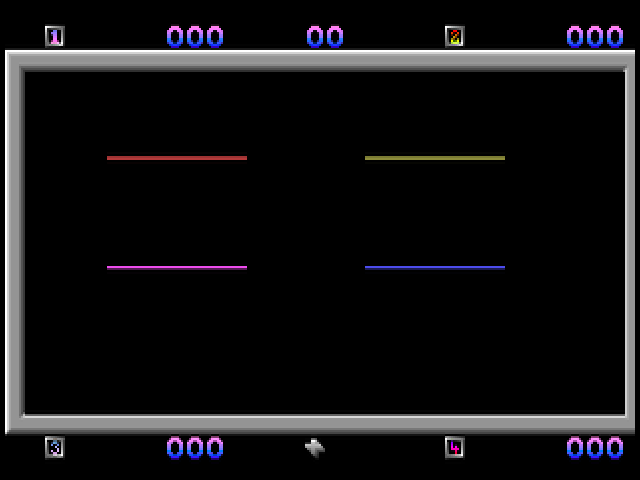
As in classic Snake, you lose a round if your snake’s head hits an obstacle (like your own tail, another snake’s tail, or the wall).
Players are meant to eat the dots that appear onscreen. Dots enable different effects, some of which you can activate with the X button. Orange dots bestow a heart that allows one player to cross over another:
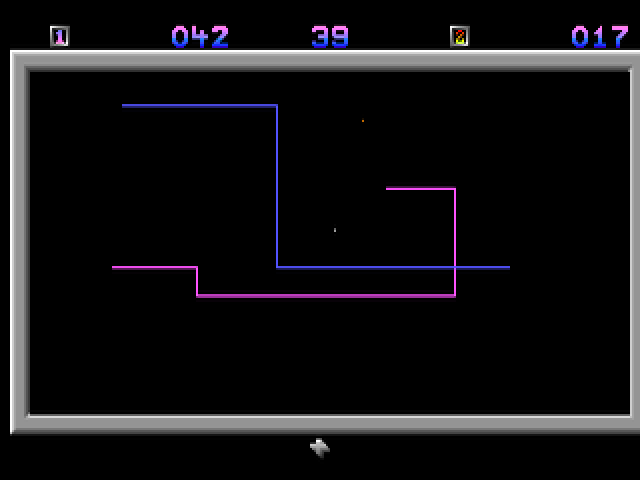
Here are most of the white dot effects:
Teleport: Your snake’s head jumps to a new location.
Stop: Your snake’s head stops moving for a moment.
Laser: A red beam starts bouncing around.
Bomb: The screen shrinks until one of the snakes hits the edge.
Brush: One snake disappears.
Water: Water starts filling the area. Your snakes’ tails can direct it.
Increase size: Your snake’s tail gets wider.
Speed up: Move even more quickly.
Revolver: Press X to shoot a hole through obstacles (such as snake tails)
Jump: Your snake’s head shoots forward, leaving its tail behind.
Spikes: Press X to make perpendicular spikes appear on your snake’s tail.
Change tail color: The other player’s tail will change colors.
Separate from tail: Your snake’s head will leave its tail behind.
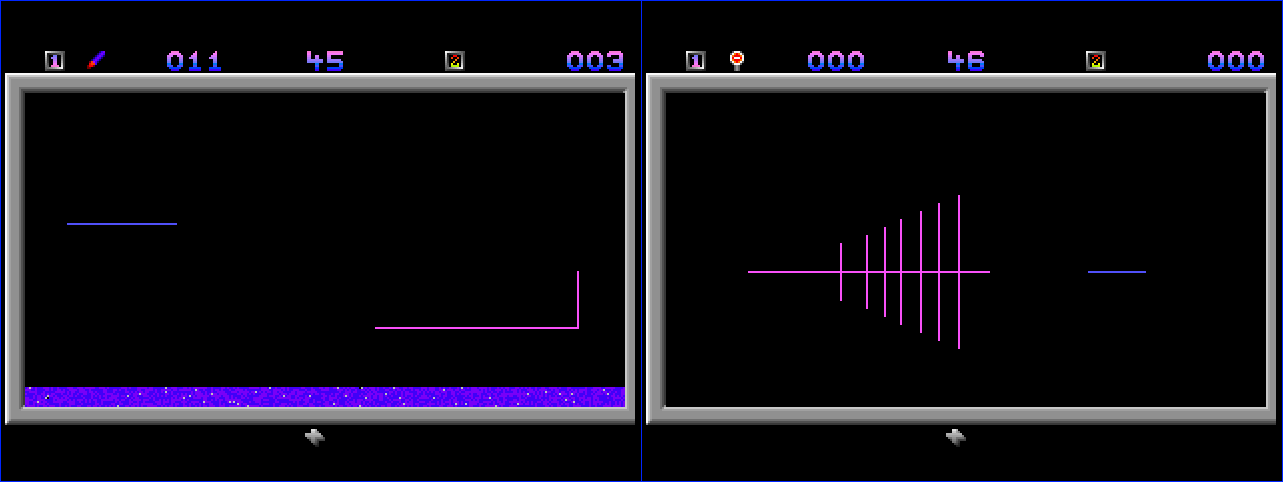
The game is devilishly hard, but my second grader and I were able to have some fun by playing on Duckstation set to emulate at 50% speed and to map our controller’s Left/Right buttons to Square/Circle.
Here’s a video of the mini-game in action!
To make things more interesting, I patched the item generation rate for this video by setting the value at 80013bf8 to 08.
Outro
Alas, this mini-game isn’t present in the Dreamcast version of V-Rally 2 (which was sold as Test Drive: V-Rally and V-Rally 2: Expert Edition in different regions). I don’t think it’s in the PC version, either. It is there in the September 27, 1999 prototype of the PlayStation version, however, and is identical to the final game’s version.
Many thanks to Jason Dvorak for figuring out how to control Araignos! And thanks to you for reading Rings of Saturn. I’ll be back with more retro game reverse engineering articles soon. You can subscribe here at Substack to get the latest articles as soon as they’re available.